

劉淳如
- 0
- 粉絲數
- 115
- 新聞數
- 0
- 獲得讚數
新聞美國增兵阿富汗 歐巴馬西點軍校演說全文+影音
美國總統歐巴馬周二(12月1日)晚間在西點軍校發表關鍵演說,宣佈美國將向阿萬汗增兵3萬,時間長達18個月,這些兵力將從2011年7月開始逐步撤回。 白宮網站張貼出歐巴馬演說的影音帶,以及講稿文字如下: THE PRESIDENT: Good evening. To the United States Corps of Cadets, to the men and women of our Armed Services, and to my fellow Americans: I want to speak to you tonight about our effort in Afghanistan -- the nature of our commitment there, the scope of our interests, and the strategy that my administration will pursue to bring this war to a successful conclusion. It's an extraordinary honor for me to do so here at West Point -- where so many men and women have prepared to stand up for our security, and to represent what is finest about our country. To address these important issues, it's important to recall why America and our allies were compelled to fight a war in Afghanistan in the first place. We did not ask for this fight. On September 11, 2001, 19 men hijacked four airplanes and used them to murder nearly 3,000 people. They struck at our military and economic nerve centers. They took the lives of innocent men, women, and children without regard to their faith or race or station. Were it not for the heroic actions of passengers onboard one of those flights, they could have also struck at one of the great symbols of our democracy in Washington, and killed many more. As we know, these men belonged to al Qaeda -- a group of extremists who have distorted and defiled Islam, one of the world’s great religions, to justify the slaughter of innocents. Al Qaeda’s base of operations was in Afghanistan, where they were harbored by the Taliban -- a ruthless, repressive and radical movement that seized control of that country after it was ravaged by years of Soviet occupation and civil war, and after the attention of America and our friends had turned elsewhere. Just days after 9/11, Congress authorized the use of force against al Qaeda and those who harbored them -- an authorization that continues to this day. The vote in the Senate was 98 to nothing. The vote in the House was 420 to 1. For the first time in its history, the North Atlantic Treaty Organization invoked Article 5 -- the commitment that says an attack on one member nation is an attack on all. And the United Nations Security Council endorsed the use of all necessary steps to respond to the 9/11 attacks. America, our allies and the world were acting as one to destroy al Qaeda’s terrorist network and to protect our common security. Under the banner of this domestic unity and international legitimacy -- and only after the Taliban refused to turn over Osama bin Laden -- we sent our troops into Afghanistan. Within a matter of months, al Qaeda was scattered and many of its operatives were killed. The Taliban was driven from power and pushed back on its heels. A place that had known decades of fear now had reason to hope. At a conference convened by the U.N., a provisional government was established under President Hamid Karzai. And an International Security Assistance Force was established to help bring a lasting peace to a war-torn country. Then, in early 2003, the decision was made to wage a second war, in Iraq. The wrenching debate over the Iraq war is well-known and need not be repeated here. It's enough to say that for the next six years, the Iraq war drew the dominant share of our troops, our resources, our diplomacy, and our national attention -- and that the decision to go into Iraq caused substantial rifts between America and much of the world. Today, after extraordinary costs, we are bringing the Iraq war to a responsible end. We will remove our combat brigades from Iraq by the end of next summer, and all of our troops by the end of 2011. That we are doing so is a testament to the character of the men and women in uniform. (Applause.) Thanks to their courage, grit and perseverance, we have given Iraqis a chance to shape their future, and we are successfully leaving Iraq to its people. But while we've achieved hard-earned milestones in Iraq, the situation in Afghanistan has deteriorated. After escaping across the border into Pakistan in 2001 and 2002, al Qaeda’s leadership established a safe haven there. Although a legitimate government was elected by the Afghan people, it's been hampered by corruption, the drug trade, an under-developed economy, and insufficient security forces. Over the last several years, the Taliban has maintained common cause with al Qaeda, as they both seek an overthrow of the Afghan government. Gradually, the Taliban has begun to control additional swaths of territory in Afghanistan, while engaging in increasingly brazen and devastating attacks of terrorism against the Pakistani people. Now, throughout this period, our troop levels in Afghanistan remained a fraction of what they were in Iraq. When I took office, we had just over 32,000 Americans serving in Afghanistan, compared to 160,000 in Iraq at the peak of the war. Commanders in Afghanistan repeatedly asked for support to deal with the reemergence of the Taliban, but these reinforcements did not arrive. And that's why, shortly after taking office, I approved a longstanding request for more troops. After consultations with our allies, I then announced a strategy recognizing the fundamental connection between our war effort in Afghanistan and the extremist safe havens in Pakistan. I set a goal that was narrowly defined as disrupting, dismantling, and defeating al Qaeda and its extremist allies, and pledged to better coordinate our military and civilian efforts. Since then, we've made progress on some important objectives. High-ranking al Qaeda and Taliban leaders have been killed, and we've stepped up the pressure on al Qaeda worldwide. In Pakistan, that nation's army has gone on its largest offensive in years. In Afghanistan, we and our allies prevented the Taliban from stopping a presidential election, and -- although it was marred by fraud -- that election produced a government that is consistent with Afghanistan's laws and constitution. Yet huge challenges remain. Afghanistan is not lost, but for several years it has moved backwards. There's no imminent threat of the government being overthrown, but the Taliban has gained momentum. Al Qaeda has not reemerged in Afghanistan in the same numbers as before 9/11, but they retain their safe havens along the border. And our forces lack the full support they need to effectively train and partner with Afghan security forces and better secure the population. Our new commander in Afghanistan -- General McChrystal -- has reported that the security situation is more serious than he anticipated. In short: The status quo is not sustainable. As cadets, you volunteered for service during this time of danger. Some of you fought in Afghanistan. Some of you will deploy there. As your Commander-in-Chief, I owe you a mission that is clearly defined, and worthy of your service. And that's why, after the Afghan voting was completed, I insisted on a thorough review of our strategy. Now, let me be clear: There has never been an option before me that called for troop deployments before 2010, so there has been no delay or denial of resources necessary for the conduct of the war during this review period. Instead, the review has allowed me to ask the hard questions, and to explore all the different options, along with my national security team, our military and civilian leadership in Afghanistan, and our key partners. And given the stakes involved, I owed the American people -- and our troops -- no less. This review is now complete. And as Commander-in-Chief, I have determined that it is in our vital national interest to send an additional 30,000 U.S. troops to Afghanistan. After 18 months, our troops will begin to come home. These are the resources that we need to seize the initiative, while building the Afghan capacity that can allow for a responsible transition of our forces out of Afghanistan. I do not make this decision lightly. I opposed the war in Iraq precisely because I believe that we must exercise restraint in the use of military force, and always consider the long-term consequences of our actions. We have been at war now for eight years, at enormous cost in lives and resources. Years of debate over Iraq and terrorism have left our unity on national security issues in tatters, and created a highly polarized and partisan backdrop for this effort. And having just experienced the worst economic crisis since the Great Depression, the American people are understandably focused on rebuilding our economy and putting people to work here at home. Most of all, I know that this decision asks even more of you -- a military that, along with your families, has already borne the heaviest of all burdens. As President, I have signed a letter of condolence to the family of each American who gives their life in these wars. I have read the letters from the parents and spouses of those who deployed. I visited our courageous wounded warriors at Walter Reed. I've traveled to Dover to meet the flag-draped caskets of 18 Americans returning home to their final resting place. I see firsthand the terrible wages of war. If I did not think that the security of the United States and the safety of the American people were at stake in Afghanistan, I would gladly order every single one of our troops home tomorrow. So, no, I do not make this decision lightly. I make this decision because I am convinced that our security is at stake in Afghanistan and Pakistan. This is the epicenter of violent extremism practiced by al Qaeda. It is from here that we were attacked on 9/11, and it is from here that new attacks are being plotted as I speak. This is no idle danger; no hypothetical threat. In the last few months alone, we have apprehended extremists within our borders who were sent here from the border region of Afghanistan and Pakistan to commit new acts of terror. And this danger will only grow if the region slides backwards, and al Qaeda can operate with impunity. We must keep the pressure on al Qaeda, and to do that, we must increase the stability and capacity of our partners in the region. Of course, this burden is not ours alone to bear. This is not just America's war. Since 9/11, al Qaeda’s safe havens have been the source of attacks against London and Amman and Bali. The people and governments of both Afghanistan and Pakistan are endangered. And the stakes are even higher within a nuclear-armed Pakistan, because we know that al Qaeda and other extremists seek nuclear weapons, and we have every reason to believe that they would use them. These facts compel us to act along with our friends and allies. Our overarching goal remains the same: to disrupt, dismantle, and defeat al Qaeda in Afghanistan and Pakistan, and to prevent its capacity to threaten America and our allies in the future. To meet that goal, we will pursue the following objectives within Afghanistan. We must deny al Qaeda a safe haven. We must reverse the Taliban's momentum and deny it the ability to overthrow the government. And we must strengthen the capacity of Afghanistan's security forces and government so that they can take lead responsibility for Afghanistan's future. We will meet these objectives in three ways. First, we will pursue a military strategy that will break the Taliban's momentum and increase Afghanistan's capacity over the next 18 months. The 30,000 additional troops that I'm announcing tonight will deploy in the first part of 2010 -- the fastest possible pace -- so that they can target the insurgency and secure key population centers. They'll increase our ability to train competent Afghan security forces, and to partner with them so that more Afghans can get into the fight. And they will help create the conditions for the United States to transfer responsibility to the Afghans. Because this is an international effort, I've asked that our commitment be joined by contributions from our allies. Some have already provided additional troops, and we're confident that there will be further contributions in the days and weeks ahead. Our friends have fought and bled and died alongside us in Afghanistan. And now, we must come together to end this war successfully. For what's at stake is not simply a test of NATO's credibility -- what's at stake is the security of our allies, and the common security of the world. But taken together, these additional American and international troops will allow us to accelerate handing over responsibility to Afghan forces, and allow us to begin the transfer of our forces out of Afghanistan in July of 2011. Just as we have done in Iraq, we will execute this transition responsibly, taking into account conditions on the ground. We'll continue to advise and assist Afghanistan's security forces to ensure that they can succeed over the long haul. But it will be clear to the Afghan government -- and, more importantly, to the Afghan people -- that they will ultimately be responsible for their own country. Second, we will work with our partners, the United Nations, and the Afghan people to pursue a more effective civilian strategy, so that the government can take advantage of improved security. This effort must be based on performance. The days of providing a blank check are over. President Karzai's inauguration speech sent the right message about moving in a new direction. And going forward, we will be clear about what we expect from those who receive our assistance. We'll support Afghan ministries, governors, and local leaders that combat corruption and deliver for the people. We expect those who are ineffective or corrupt to be held accountable. And we will also focus our assistance in areas -- such as agriculture -- that can make an immediate impact in the lives of the Afghan people. The people of Afghanistan have endured violence for decades. They've been confronted with occupation -- by the Soviet Union, and then by foreign al Qaeda fighters who used Afghan land for their own purposes. So tonight, I want the Afghan people to understand -- America seeks an end to this era of war and suffering. We have no interest in occupying your country. We will support efforts by the Afghan government to open the door to those Taliban who abandon violence and respect the human rights of their fellow citizens. And we will seek a partnership with Afghanistan grounded in mutual respect -- to isolate those who destroy; to strengthen those who build; to hasten the day when our troops will leave; and to forge a lasting friendship in which America is your partner, and never your patron. Third, we will act with the full recognition that our success in Afghanistan is inextricably linked to our partnership with Pakistan. We're in Afghanistan to prevent a cancer from once again spreading through that country. But this same cancer has also taken root in the border region of Pakistan. That's why we need a strategy that works on both sides of the border. In the past, there have been those in Pakistan who've argued that the struggle against extremism is not their fight, and that Pakistan is better off doing little or seeking accommodation with those who use violence. But in recent years, as innocents have been killed from Karachi to Islamabad, it has become clear that it is the Pakistani people who are the most endangered by extremism. Public opinion has turned. The Pakistani army has waged an offensive in Swat and South Waziristan. And there is no doubt that the United States and Pakistan share a common enemy. In the past, we too often defined our relationship with Pakistan narrowly. Those days are over. Moving forward, we are committed to a partnership with Pakistan that is built on a foundation of mutual interest, mutual respect, and mutual trust. We will strengthen Pakistan’s capacity to target those groups that threaten our countries, and have made it clear that we cannot tolerate a safe haven for terrorists whose location is known and whose intentions are clear. America is also providing substantial resources to support Pakistan’s democracy and development. We are the largest international supporter for those Pakistanis displaced by the fighting. And going forward, the Pakistan people must know America will remain a strong supporter of Pakistan’s security and prosperity long after the guns have fallen silent, so that the great potential of its people can be unleashed. These are the three core elements of our strategy: a military effort to create the conditions for a transition; a civilian surge that reinforces positive action; and an effective partnership with Pakistan. I recognize there are a range of concerns about our approach. So let me briefly address a few of the more prominent arguments that I've heard, and which I take very seriously. First, there are those who suggest that Afghanistan is another Vietnam. They argue that it cannot be stabilized, and we're better off cutting our losses and rapidly withdrawing. I believe this argument depends on a false reading of history. Unlike Vietnam, we are joined by a broad coalition of 43 nations that recognizes the legitimacy of our action. Unlike Vietnam, we are not facing a broad-based popular insurgency. And most importantly, unlike Vietnam, the American people were viciously attacked from Afghanistan, and remain a target for those same extremists who are plotting along its border. To abandon this area now -- and to rely only on efforts against al Qaeda from a distance -- would significantly hamper our ability to keep the pressure on al Qaeda, and create an unacceptable risk of additional attacks on our homeland and our allies. Second, there are those who acknowledge that we can't leave Afghanistan in its current state, but suggest that we go forward with the troops that we already have. But this would simply maintain a status quo in which we muddle through, and permit a slow deterioration of conditions there. It would ultimately prove more costly and prolong our stay in Afghanistan, because we would never be able to generate the conditions needed to train Afghan security forces and give them the space to take over. Finally, there are those who oppose identifying a time frame for our transition to Afghan responsibility. Indeed, some call for a more dramatic and open-ended escalation of our war effort -- one that would commit us to a nation-building project of up to a decade. I reject this course because it sets goals that are beyond what can be achieved at a reasonable cost, and what we need to achieve to secure our interests. Furthermore, the absence of a time frame for transition would deny us any sense of urgency in working with the Afghan government. It must be clear that Afghans will have to take responsibility for their security, and that America has no interest in fighting an endless war in Afghanistan. As President, I refuse to set goals that go beyond our responsibility, our means, or our interests. And I must weigh all of the challenges that our nation faces. I don't have the luxury of committing to just one. Indeed, I'm mindful of the words of President Eisenhower, who -- in discussing our national security -- said, "Each proposal must be weighed in the light of a broader consideration: the need to maintain balance in and among national programs." Over the past several years, we have lost that balance. We've failed to appreciate the connection between our national security and our economy. In the wake of an economic crisis, too many of our neighbors and friends are out of work and struggle to pay the bills. Too many Americans are worried about the future facing our children. Meanwhile, competition within the global economy has grown more fierce. So we can't simply afford to ignore the price of these wars. All told, by the time I took office the cost of the wars in Iraq and Afghanistan approached a trillion dollars. Going forward, I am committed to addressing these costs openly and honestly. Our new approach in Afghanistan is likely to cost us roughly $30 billion for the military this year, and I'll work closely with Congress to address these costs as we work to bring down our deficit. But as we end the war in Iraq and transition to Afghan responsibility, we must rebuild our strength here at home. Our prosperity provides a foundation for our power. It pays for our military. It underwrites our diplomacy. It taps the potential of our people, and allows investment in new industry. And it will allow us to compete in this century as successfully as we did in the last. That's why our troop commitment in Afghanistan cannot be open-ended -- because the nation that I'm most interested in building is our own. Now, let me be clear: None of this will be easy. The struggle against violent extremism will not be finished quickly, and it extends well beyond Afghanistan and Pakistan. It will be an enduring test of our free society, and our leadership in the world. And unlike the great power conflicts and clear lines of division that defined the 20th century, our effort will involve disorderly regions, failed states, diffuse enemies. So as a result, America will have to show our strength in the way that we end wars and prevent conflict -- not just how we wage wars. We'll have to be nimble and precise in our use of military power. Where al Qaeda and its allies attempt to establish a foothold -- whether in Somalia or Yemen or elsewhere -- they must be confronted by growing pressure and strong partnerships. And we can't count on military might alone. We have to invest in our homeland security, because we can't capture or kill every violent extremist abroad. We have to improve and better coordinate our intelligence, so that we stay one step ahead of shadowy networks. We will have to take away the tools of mass destruction. And that's why I've made it a central pillar of my foreign policy to secure loose nuclear materials from terrorists, to stop the spread of nuclear weapons, and to pursue the goal of a world without them -- because every nation must understand that true security will never come from an endless race for ever more destructive weapons; true security will come for those who reject them. We'll have to use diplomacy, because no one nation can meet the challenges of an interconnected world acting alone. I've spent this year renewing our alliances and forging new partnerships. And we have forged a new beginning between America and the Muslim world -- one that recognizes our mutual interest in breaking a cycle of conflict, and that promises a future in which those who kill innocents are isolated by those who stand up for peace and prosperity and human dignity. And finally, we must draw on the strength of our values -- for the challenges that we face may have changed, but the things that we believe in must not. That's why we must promote our values by living them at home -- which is why I have prohibited torture and will close the prison at Guantanamo Bay. And we must make it clear to every man, woman and child around the world who lives under the dark cloud of tyranny that America will speak out on behalf of their human rights, and tend to the light of freedom and justice and opportunity and respect for the dignity of all peoples. That is who we are. That is the source, the moral source, of America’s authority. Since the days of Franklin Roosevelt, and the service and sacrifice of our grandparents and great-grandparents, our country has borne a special burden in global affairs. We have spilled American blood in many countries on multiple continents. We have spent our revenue to help others rebuild from rubble and develop their own economies. We have joined with others to develop an architecture of institutions -- from the United Nations to NATO to the World Bank -- that provide for the common security and prosperity of human beings. We have not always been thanked for these efforts, and we have at times made mistakes. But more than any other nation, the United States of America has underwritten global security for over six decades -- a time that, for all its problems, has seen walls come down, and markets open, and billions lifted from poverty, unparalleled scientific progress and advancing frontiers of human liberty. For unlike the great powers of old, we have not sought world domination. Our union was founded in resistance to oppression. We do not seek to occupy other nations. We will not claim another nation’s resources or target other peoples because their faith or ethnicity is different from ours. What we have fought for -- what we continue to fight for -- is a better future for our children and grandchildren. And we believe that their lives will be better if other peoples’ children and grandchildren can live in freedom and access opportunity. (Applause.) As a country, we're not as young -- and perhaps not as innocent -- as we were when Roosevelt was President. Yet we are still heirs to a noble struggle for freedom. And now we must summon all of our might and moral suasion to meet the challenges of a new age. In the end, our security and leadership does not come solely from the strength of our arms. It derives from our people -- from the workers and businesses who will rebuild our economy; from the entrepreneurs and researchers who will pioneer new industries; from the teachers that will educate our children, and the service of those who work in our communities at home; from the diplomats and Peace Corps volunteers who spread hope abroad; and from the men and women in uniform who are part of an unbroken line of sacrifice that has made government of the people, by the people, and for the people a reality on this Earth. (Applause.) This vast and diverse citizenry will not always agree on every issue -- nor should we. But I also know that we, as a country, cannot sustain our leadership, nor navigate the momentous challenges of our time, if we allow ourselves to be split asunder by the same rancor and cynicism and partisanship that has in recent times poisoned our national discourse. It's easy to forget that when this war began, we were united -- bound together by the fresh memory of a horrific attack, and by the determination to defend our homeland and the values we hold dear. I refuse to accept the notion that we cannot summon that unity again. (Applause.) I believe with every fiber of my being that we -- as Americans -- can still come together behind a common purpose. For our values are not simply words written into parchment -- they are a creed that calls us together, and that has carried us through the darkest of storms as one nation, as one people. America -- we are passing through a time of great trial. And the message that we send in the midst of these storms must be clear: that our cause is just, our resolve unwavering. We will go forward with the confidence that right makes might, and with the commitment to forge an America that is safer, a world that is more secure, and a future that represents not the deepest of fears but the highest of hopes. (Applause.) Thank you. God bless you. May God bless the United States of America. (Applause.) Thank you very much. Thank you. (Applause.) END
留言0喜歡新聞地球降溫行動 英法提議斥資百億美元助窮國減碳
英國和法國對於12月舉行的聯合國全球氣候變遷高峰會議相當積極,兩國提議斥資百億美元,用於協助發展中國家的減少溫室氣體排放及應對氣候變化。 英國首相布朗和法國總統沙科吉是英聯邦峰會上提出這項建議。包括聯合國祕書長潘基文在內的許多世界領導人也都受邀參加兩年舉行一次的會議。 根據BBC報導,英國首相布朗形容這次峰會是「面向哥本哈根的重要跳板」。而氣候變化也成為英聯邦峰會第一天的惟一議題。 布朗建議設立一個100億美元的減排基金,其中一半資金用於幫助發展中國家減少二氧化碳排放,另一半用於幫助它們應對氣候變化。他表示,第一批資金將於明年到位。 他還提出今後三年英國將為這個基金提供八億美元。這筆錢已經編入政府預算。 另外,法新社引述法國總統薩爾科奇說,建議在2010-12年期間每年斥資100億美元用於這方面的工作。
留言0喜歡新聞杜拜風暴 全球股市重挫
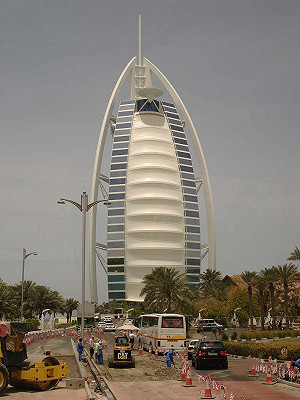
杜拜政府要求展延兩大國營企業主權投資公司杜拜世界(Dubai World)及地產開發商棕櫚樹(Nakheel)的償債期限,在全球股市引發恐慌,歐洲三大股市都重挫,跌幅超過3%;亞洲部份,港股恆生指數重挫4.71%、日股日經指數挫3.212%,韓國股市跌幅也達4.69%,台股則下跌248點,跌幅3.21%。 杜拜世界總負債590億美元。它原本應該下個月償付35億美元債務,但26日向債權人請求將還貸日期推遲半年到明年5月。這個請求導致各主要評級公司分別降低了迪拜政府參股或支持的公司股票的級別。評級公司認為,這麼大規模的債務重組跟違約沒什麼區別。 BBC報導指出,分析員認為杜拜政府過去幾年採用的經濟模式建立在外國資本和大型建築項目投資基礎上,現在正為這種華而不實的發展付出代價。過去6年,杜拜經濟連年增長迅速,也吸引了許多投資者到杜拜淘金。 如今傳出杜拜償貸能力有問題,股票市場中的銀行股受到打擊最大。 根據「彭博」報導,匯豐控股(HSBC Holdings)與渣打集團(Standard Charter)跌幅雙雙超過4%;高盛證券(Goldman Sachs Group)指出,杜拜延後償債對匯豐與渣打是「尚可處理的衝擊」。 同時還有一長串的杜拜概念股也都因為這個消息遭到慘跌。 倫敦證交所集團 (London Stock Exchange Group)股價重挫60便士或7.4%,收754.5便士,跌幅是4月來最大。該公司的最大股東即是杜拜證交所公司 (Borse Dubai Ltd.),持有其21%的股權。 歐洲航空防衛及太空公司 (European Aeronautic,Defence & Space)大跌4.3%,收11.74歐元。杜拜國際資本公司擁有這家公司3%的股權。 歐洲最大建材供應商聖戈班 (Cie. de Saint-Gobain SA)在高盛集團建議投資人賣出,大跌6.4%。 日本營造商大林組(Obayashi Corp.)股價狂瀉11%,大和證券(Daiwa Securities Group)指出,杜拜驚傳倒債危機,日本建商恐拿不回部份款項。 至於台灣的金融機構,今天緊急清查旗下曝險,截至目前為止,新光金控曝險部位約500萬美元、台新金曝險部位1500萬美元;開發金控、元大金控、永豐金控、國票金控都已清查旗下無杜拜世界曝險部位,公營行庫的曝險額度仍在清查。
 留言0喜歡
新聞美中兩國提出減碳目標 為氣候協議注入生機
世界兩個最大碳排放國,美國及中國在26日分別提出各自的減排計畫,依照2005年的碳強度標準,中國將在10年內減少排放40%到45%,美國的目標則是減少17%。國際能源總署(IEA)首席經濟學家比羅爾表示,這將是氣候變化談判的里程碑,將可能促成能源行業的變革。 美中的交鋒在氣候峰會前就已展開,目前看來,原來一直沒有正面回應的中國,一口氣提出減少排放40%,相較於美國的17%,略勝一疇。 英國丁道爾氣候變遷研究中心(Tyndall Centre for Climate Change Research)能源計畫共同主持人華森(Jim Watson)指出,美國的數字,遠低於聯合國「政府間氣候變遷問題小組」(IPCC)認為美國需要做出的貢獻。 IPCC認為,工業化國家在2020年以前必須使排放量比1990年減少25%到40%,才能達成防止氣溫升高攝氏兩度以上的目標。依照這個計算方式,美國公布的2020年目標,只等於是減排4%。 IEA的比羅爾(Fatih Birol)則相當肯定中國的表態,他說,全世界需減少排放38億公噸二氧化碳,而中國能減少大約10億公噸,獨自負責減少全世界25%的氣體排放量,這將能把全球暖化升溫控制在攝氏2度以內。 中美兩國提出減碳目標,雖然為聯合國氣候會談注入生機,但科學家說,這些計畫不足以避免嚴重的全球暖化。 聯合國的氣候會談將於12月7日至18日在哥本哈根舉行,目的在針對全球暖化問題研擬出可持久的因應之道。到目前,世界主要國家都已經公布減排目標,唯一的例外是印度。
留言0喜歡新聞美中將在哥本哈根氣候高峰會上交鋒
繼美國總統歐巴馬決定參加哥本哈根峰會,中國外交部今天宣布,將由總理溫家寶代表中國出席。中美兩國共佔了全球溫室氣體排放的40%,因此,讓中美之間能否達成協議對氣候談判的成功,相當關鍵。 距離12月7日哥本哈根全球氣候峰會的召開,剩下不到兩週的時間,根據華爾街日報報導,中國外交部氣候變化談判特別代表于慶泰指責歐洲未能兌現之前作出的有關溫室氣體排放的承諾,包括減排、技術轉讓和向貧困國家提供援助。 到目前為止,就達成一項接替2012年到期的《京都議定書》(Kyoto Protocol)的氣候協議已經進行了兩年的談判。全球氣候談判代表們曾希望,哥本哈根峰會能成為談判的關鍵轉折點。由於未來幾天的障礙看來難以克服、談判代表們互相指責,這個目標似乎難以實現。 不過,華爾街日報認為,于慶泰的話強化了中國強硬的談判立場。中國一再呼籲就碳排放達成一項全球協議,不過卻不願承諾作出達成協議所需的艱巨犧牲,中國說這個重任應該在發達國家肩上。 中國堅持,己開發國家有義務清理它們所產生的碳排放。儘管中國已經超過美國成為世界上最大的溫室氣體排放國,中國提議,發達國家應該把國內生產總值的1%用於補貼發展中國家的減排努力,以便減少碳排放;由此估算﹐單是美國就要拿出超過1400億美元,因此美國對中國的提議持反對立場,說這個提議不切實際。 于慶泰說,「我們不可能接受中國人只享有發達國家三分之一排放權利的想法。」他把目前談判進展緩慢歸咎於已開發國家。他說,過去兩年我們在談判過程中確實用了許多時間放在一些邊緣問題上,我的看法是因為已開發國家在談判過程中沒有顯示出足夠的誠意來。 中國單方面採取了措施,努力提高能源利用率和能源安全,這些措施幫助減緩了中國溫室氣體排放的增速。據位於巴黎的國際能源署(International Energy Agency)的數據,中國的能源消耗目標將佔全球減排、遏制全球變暖目標的四分之一。
留言0喜歡新聞歐巴馬將出席氣候峰會 美國提出2020年碳排放量少17%
美國白宮今天宣佈,總統歐巴馬將於12月9日前往丹麥首都哥本哈根,出席聯合國氣候變遷會議。屆時歐巴馬也將提出美國將在2020年實現溫室氣體排放量較05年水準減少17%。 身為全球最大的溫室氣體排放國領袖,華爾街日報指出,歐巴馬決定參加哥本哈根峰會,以及將在峰會前宣布減排目標,將會加大中國承受的壓力,促使中國做出自己的減排承諾。 各國領袖和環保人士紛紛讚揚歐巴馬決定出席哥本哈根氣候會議,寄望此舉能為12月7-18日舉行的此會議帶來新生機。 白宮說,歐巴馬將在會中提議,美國準備在2020年以前,將溫室氣體排放量降低到較2005年排放水準減少17%;然後配合國會立法進度設定各階段目標,希望於2050年以前將排放量削減83%。 相較於幾乎所有其他國家都以1990年排放水準作為減排基準,美國提出的減排17%目標,約僅相當於減排4%而已。 在本週之前,氣候峰會一直缺少大國元首的支持,奧巴馬政府也一直沒有表態是否會在下個月聯合國在丹麥召開的哥本哈根峰會上正式提出具體的減排目標。根據華爾街日報的報導,白宮是擔心如果提前向外作出減排承諾,可能美國參議院最後會作出修改。參議院領袖已經表示,明年春季之前參議院不會提出氣候變化議案。 中國國家主席胡錦濤近期提議採用「碳密度目標」,制定單位經濟產值釋放的二氧化碳數量。如果採用這一目標,中國的排放量仍會增長﹐但增速會放緩。中國政府沒有對這些目標作出過具體解釋。 華爾街日報還指出,下周展開的全球氣候峰會最為重要的一個問題是:美國將投入多少資金幫助發展中國家應對氣候變化。中國已經提議發達國家拿出國內生產總值(GDP)的1%﹐為較貧困國家提供補貼以遏制二氧化碳排放。由此估算﹐單是美國就要拿出超過1,400億美元。美國官員表示中國的提議是不切實際的。
留言0喜歡新聞重啟台美牛談判公投 19萬台灣消費者參與連署
AIT主席薄瑞光認為台灣民間的反美國牛是選舉假議題,不過根據消基會發起的重啟台美牛肉談判公投提案連署,至今(23)日已達19萬3288份,達到公投連署第一階段提案門檻,消基會將於本周內將連署書裝訂成冊送交中選會。 為反對政府放寬美國牛肉進口的談判協議,由消基會、主婦聯盟基金會、董氏基金會、民間監督健保聯盟等單位共同發動「台美重啟談判」公投連署活動,從11月1日啟動到23日,消基會已到會的實收連署達到19萬多份。 消基會今天在網站上宣布,「第一階段提案公投連署活動,結合著全體消費者的力量,大家努力連署的份數已超過19多萬份,我們已經完成第一階段任務了!」 消基會表示,此次公投分兩階段,第一階段已經完成任務,非常感謝全體消費者的支持與響應;敬請尚未連署完成的消費者暫停連署,蓄積更大的能量衝刺第二階段的公投連署,第二階段的安全連署份數是120萬份。
留言0喜歡新聞放寬美牛進口爭議 薄瑞光:這是選舉假議題
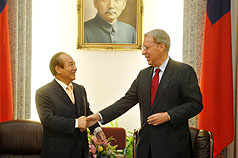
政府放寬美國牛肉進口政策在台灣引發爭議,美國在台協會(AIT)主席薄瑞光今天在拜會立法院長王金平時表示,美國牛肉在台灣是假議題、政治議題,尤其現在是選舉時期,很多事都會變成政治議題。他特別指出,美國政府與台灣政府處理美國牛肉已有一段時間,過去也跟前總統陳水扁談過。 昨(22日)日抵台的美國在台協會(AIT)主席薄瑞光,今天一早展開他的在台行程,第一站拜會立法院長王金平。 對於美國帶骨牛肉進口在台灣吵得沸沸揚揚,薄瑞光一開口就說,「容我這麼說,這是個假議題。顯然地,這是個政治議題,顯然地,這是因為選舉到了,台灣年底將有選舉。」 薄瑞光說,多數美國人吃的牛肉,跟進口台灣是一樣的,連處理程序都一樣。美國人每天都給自己的小孩、孫子吃美國牛肉,沒有人會擔心,在美國也沒有爭議。 他表示,陳水扁政府曾對美國牛肉做過風險評估,結論是美國牛肉是安全的;現在的政府也做過風險評估,也認為美國牛肉安全。因此,兩個政黨對美國牛肉看法一致,就是美國牛肉安全,「這是好事」。 會談中,王金平也很明確告訴薄瑞光,台灣不樂意看見諸如美國牛絞肉、內臟、頭骨、脊髓、眼睛、腦等所謂高風險部位進口台灣。因為從政治氣氛到現在的大環境來講,有任何上述東西出現,都可能引起更大問題,希望美方認知、理解;但薄瑞光認為,這是細節的部分,沒有辦法談這麼細節的問題。 至於美方對牛肉進口有沒有什麼堅持的立場?王金平說,美方希望所有簽署的協議,都應被履行;希望台灣能履行台美議定書所有規範。 此外,王金平指出,希望美方給予台灣人免簽證優惠能早日落實;有關台美貿易暨投資架構協定(TIFA)重新開啟談判,薄瑞光也表示理解。至於像自由貿易協定(FTA)簽署,薄瑞光說,美國政府可能還沒有考慮要如何啟動相關諮商。
 留言0喜歡
新聞歐盟首任主席 比利時首相范宏畢出線
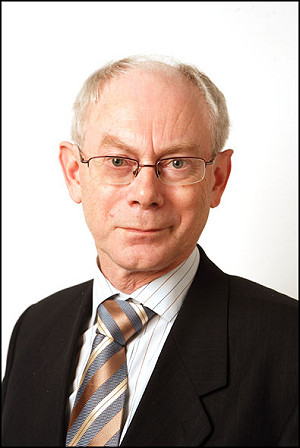
在經過了數個星期的反覆討論後,歐盟27國元首與政府首長在19日選出歐盟首任主席,華爾街日報指出,少有人關注的比利時首相,和英國一位從未被選上任何職位的貿易代表,分別被歐盟各國領導人選為歐盟首任主席和外交部長。 19日歐盟27國元首與政府首長在布魯塞爾舉行高峰會,並確定由比利時首相范宏畢(Herman Van Rompuy)出任歐盟主席,以及英國的歐盟貿易執行委員艾希頓(Catherine Ashton)出任新設的外交首長職務。至於之前盛傳的人選,原本希望藉由出任歐盟主席在政治上東山再起的前英國首相布萊爾(Tony Blair),則未得到英國政府的支持。 歐盟主席和外長的職位是依據歐盟里斯本條約(Lisbon Treaty)而設,這項條約是一套針對歐盟內部職能的改革方案,希望歐洲更加強大,提高歐盟在世界的影響力。歐洲各國在幾個星期前簽署了里斯本條約。 至於歐盟主席的角色和功能,是歐盟內部大國和小國相互妥協的結果,大國渴望能有位強有力的人來執掌歐盟,而小國則希望歐盟主席是位能幫助各成員國建立共識的人,以確保小國的利益不受踐踏。 華爾街日報指出,此次選定的兩位政治家,在其本國之外,基本上沒有知名度。可能讓原本的期待落空。 而法新社報導則指出,62歲的范宏畢所以能夠出線,是因為各國領袖期待這位常任主席能夠在幕後協調,讓歐盟各國與主要機構建立共識。這些機構包括歐盟執行委員會和歐洲議會。 根據華爾街日報報導,其實范宏畢成為比利時首相純屬偶然。比利時法語區和荷語區的脆弱聯盟瓦解過後,比利時國王讓范宏畢來收拾局面,於是他成為了首相。 范宏畢來自比利時講荷語的北部,是一位愛好日本徘句的知識分子。他處事低調,但被認為是一位有說服力的談判家,熱心尋求妥協。在充滿宿怨的比利時,議會分成了荷語區、法語區和雙語布魯塞爾幾個派別,所以談判和妥協是一種至關重要的技能。 當地時間週四晚上﹐范宏畢手持一束黃色鮮花出席新聞發佈會。他說,「我沒有謀求這一高位,但從今晚開始,我將以信心和熱情去履行它。」 2008年年末成為首相之前,他上一次成為關注焦點是在上世紀90年代擔任預算大臣的時候,當時他承擔著取消比利時法郎、引進歐元的任務。 范宏畢是在經歷數月爭吵後才當上首相的,他被選為歐盟主席可能會使比利時政界再度陷入動盪。在法語和荷語人群劍拔駑張的比利時,他是少數能同時得到雙方支持的人之一。 至於來自英國的艾希頓,1999年由工黨政府推舉成為貴族議員,曾在英國教育部和司法部擔任過幾個低級職位,後來在2007年被指定為工黨上院領袖。曼德爾森(Peter Mandelson)被英國政府從歐盟貿易專員的職位召回後,英首相布朗讓阿什頓前往布魯塞爾頂替了他。 曾與艾希頓共事的工黨貴族議員麥克唐納(Margaret McDonagh)說,她相信這位曾經的同事會成為這個職位很好的人選。 她說,什頓是一個可以很快建立起關係的人,為人坦率認真。在英國,艾希頓的知名度也不高,更不用說在國際上。 不過,歐盟各國已有廣泛默契,認為常任主席應出自在歐洲議會勢力最大的中間偏右陣營,而外交事務首長則應出自勢力次大的社會黨陣營。
 留言0喜歡
新聞呂秀蓮:中美已站在同一陣線
美國總統歐巴馬和中國國家主席胡錦濤昨天發表聯合聲明,前副總統呂秀蓮今天表示,中國已經成功把美國拉到同一陣線,這是嚴重的警訊。 呂秀蓮表示,過去中美雙方都是個別談論對台關係,如今中美已經站在同一陣線,但總統馬英九卻「自我觀感良好」,表示這是中美台三方60年來最麻吉的狀況,這和台灣人民的立場不同。 呂秀蓮表示,歐巴馬的談話提到肯定也歡迎台灣與中國進行政治與經濟的對話,這已經違反817公報。公報中有6個對台灣的保証,絕不會逼台灣與中國談判, 歐巴馬的談話已違反了美國的基本國策。 另外,歐巴馬雖然在美中聯合記者會提到「台灣關係法」,但卻未列共同聲明,也是值得注意的警訊。
留言0喜歡新聞中美聯合聲明重申一個中國 未提台灣關係法
美國總統歐巴馬和中國國家主席胡錦濤今天共同發表「中美聯合聲明」,有關台灣問題,美方強調,奉行一個中國政策,遵守中美三個聯合公報的原則;中國則繼續堅持,台灣問題涉及中國主權和領土完整,希望美方信守有關承諾,理解和支持中方在此問題上的立場。 雖然聲明中沒有提及「台灣關係法」,不過歐巴馬在中午和胡錦濤一起會見記者時特別說明,美國的政策是,在美中聯合公報及台灣關係法的基礎上,支持這些聯繫進一步發展,這些聯繫符合雙方的利益、更廣泛地區的利益,也符合美國利益。 延續昨天在對中國青年的對話,歐巴馬說,美國對美國對於中國和台灣已經採取旨在緩和緊張局勢、建立台灣海峽兩邊聯繫所採取的行動表示稱讚。 此外,歐巴馬也提到西藏問題,他表示,美國認識到「西藏是中國一部分」的同時,美國支持中國政府和達賴喇嘛代表們之間的對話早日恢復,並解決雙方可能存在的關鍵和困難。 對於歐巴馬的談話內容,胡錦濤除了讚賞歐巴馬多次重申堅持「一個中國」政策,尊守中美三個聯合公報,在台灣等問題上尊重中國主權和領土完整。 至於有關達賴議題,胡錦濤回應,中美雙方將繼續本著平等、相互尊重、互不干涉內政的精神,就人權和宗教等問題開展對話交流,以增進瞭解、減少分歧、擴大共識。 以下是「中美聯合聲明」有關台灣部分的內容: 雙方強調台灣問題在中美關係中的重要性。中方強調,台灣問題涉及中國主權和領土完整,希望美方信守有關承諾,理解和支持中方在此問題上的立場。美方表示奉行一個中國政策,遵守中美三個聯合公報的原則。美方歡迎台灣海峽兩岸關係和平發展,期待兩岸加強經濟、政治及其他領域的對話與互動,建立更加積極、穩定的關係。 雙方重申,互相尊重主權和領土完整這一根本原則是指導中美關係的中美三個聯合公報的核心。雙方均不支持任何勢力破壞這一原則的任何行動。雙方一致認為,尊重彼此核心利益對確保中美關係穩定發展極端重要。
留言0喜歡新聞訪中行程受限 歐巴馬魅力無從展現
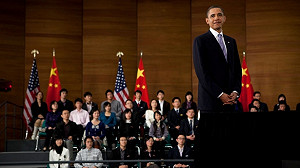
「隨著此次訪華行程的進行,美國總統歐巴馬(Barack Obama)發現很難展現他標誌性的個人魅力。」華爾街日報在歐巴馬訪問中國的第二天做了這樣的評論。由於訪華時間太短,再加上周一與中國青年對話的這惟一能展現歐巴馬平易近人的活動,最後也變成只是照本宣科。 華爾街日報說,歐巴馬演講的對象是一群從上海地區精挑細選出來的青年,其中一些人說他們是經過「培訓」後被大巴車運來參加活動的。負責報導白宮事務的記者被安排在一個「觀看室」裡,卻無法看到活動的情況。 這場對談,白宮網站前一天就進行預告,並在當天透過網路對全世界做即時直播,可見白宮相當重視;但在中國當地卻只有一家電視台播出。即使新華社報導指出活動的影音會發佈到網上,但最後找遍新華網,最後卻只有問答部分的文字實錄。這也讓美方原本期待可以讓歐巴馬在中國大展魅力的一場秀,無法讓全中國的老百姓親眼目睹。 只剩下周二,歐巴馬和中國國家主席胡錦濤在北京會面後,兩人發表聯合聲明時的電視直播,這可能是歐巴馬直接面對中國民眾發表講話的唯一機會。 華爾街日報指出,外界預計歐巴馬此行既無法達成重大實質性協議﹐也不太可能獲得明顯的象徵性勝利。長期觀察人士說﹐歐巴馬此次訪問是近期記憶中控制最為嚴密的一次,歐巴馬沒有像他的兩位前任一樣得到直接面對中國民眾的機會。歐巴馬將於周三結束此次訪華行程。 正在中國做訪問學者的喬治華盛頓大學(George Washington University)中國研究教授沈大偉(David Shambaugh)說,神秘之處是缺乏公眾接觸。歐巴馬是一個民粹主義政治家,但他無法與中國民眾進行任何互動。 美國和中國官員說,雙方就歐巴馬訪問行程產生了激烈爭論。一位中國媒體內部人士透露,美國希望有機會讓歐巴馬展現他的上鏡魅力,呼籲實現進一步自由,但中國官員拒絕了。中國方面擔心這會讓歐巴馬看起來比中國政界人士更平易近人,中國領導人出現在電視上的畫面都是視察等精心安排的活動。 美國政府高級官員為歐巴馬此次訪華進行了辯護﹐他們拒絕將歐巴馬此次訪華與克林頓(Bill Clinton)任總統期間時間更長、更為自由的訪華行程進行不利的比較。 歐巴馬高級顧問阿克爾羅德(David Axelrod)說,歐巴馬此次是集中訪問亞洲,這意味著他必須壓縮訪華時間。歐巴馬必須先在日本停留,日本是美國信賴的盟友﹔隨後他前往新加坡參加亞太 經濟合作組織(APEC)會議,還要去韓國就朝鮮這個最為緊迫的外交政策問題展開磋商。 阿克爾羅德說,克林頓當時訪華時間超過一週,他有時間做很多事情,會見更多的人。而這次在中國的時間只有兩天半。 歐巴馬此次訪華缺乏民眾互動的問題周二將變得尤為明顯。雖然胡錦濤與歐巴馬將出席新聞發佈會,但他們不會回答問題。知情人士稱,歐巴馬下午將觀光,隨後將參加一場國宴,中國方面控制著邀請赴宴名單。此次宴會沒有邀請美國資深商業領袖以及學術界人士。 歐巴馬週三將會晤中國總理溫家寶,當天下午乘飛機離開。預計這些會談不會達成重大協議或聲明。 這與1998年克林頓訪華時形成了鮮明的對比。當時﹐克林頓有四次直接向中國聽眾發表演講的機會﹐其中包括一次不受審查的中央電視台現場採訪和對中國學生的數次演講。不過﹐當時中國是在努力獲得克林頓這位自1989年以來首次訪華的總統的好感。 2002年﹐前總統小布希(George W. Bush)對中國大學生發表了一次演講,讚揚了政治和宗教信仰自由。那次的演講在中央電視台播出。 相比之下,眼下美國的地位遠沒有以往訪華時那麼強,美國的經濟受到金融危機的沖擊,軍隊正在海外進行著兩場漫長的戰爭。人民大學教授時殷弘說,美國不能再把自己的日程強加到中國身上了。
 留言0喜歡
新聞出席東協峰會 歐巴馬呼籲緬甸釋放翁山蘇姬
美國總統歐巴馬今天在出席東協高峰會時,當著緬甸總理添盛(Thein Sein)的面,呼籲緬甸釋放民主運動領袖翁山蘇姬(Aung San Suu Kyi)。 歐巴馬出席東協高峰會,這是東協創立以來首位正式與東南亞國家協會(ASEAN)領袖集會的美國總統。 這也是幾十年來東協與美國頭一次就緬甸問題站在同一陣線。緬甸是東協10個會員國的最新成員。歐巴馬政府主張加強和緬甸接觸,認為僅靠制裁不能推進緬甸的民主和人權。 東協成立於越戰最激烈之時,已有42年歷史。
留言0喜歡新聞APEC宣言:拒絕貿易保護主義 追求成長新策略
全球爆發數十年來最嚴重的經濟危機之後,美國及中國總統在內的亞太各國領袖今天誓言,將對貿易保護主義說不,並尋求推動經濟成長的新策略。 除了對追求全球經濟成長宣示,對於氣候議題,各國領袖也承諾,將確保解決氣候變化問題的工作「與我們國際貿易的義務職責一致」,並將在下個月的哥本哈根會議,針對對抗氣候變遷威脅,取得目標遠大的成果。但宣言中沒有明確訂定2050年之前,將減少多少溫室效應氣體排放量。 亞太經合組織APEC領袖15日發表聯合宣言,聲明致力於在進行結構改革、創造經濟機會以及減緩氣候變化問題等三方面取得增長,並杜絕一切形式的貿易保護主義。 宣言中指出;「我們堅決反對各種形式的保護主義,同時再度承諾,我們將繼續保持市場開放,同時避免在投資上或商品及服務貿易上,建立新的壁壘。」 同時也強調,「我們不能回到『像以往一樣的成長』。」他們發表宣言之前,美國總統歐巴馬在新加坡峰會向亞洲各國領袖施壓,希望他們重組出口導向經濟、重新平衡全球經濟成長。 APEC會議是在全球經濟復蘇仍未明朗的情況下進行,而在會議前的亞太財長會議中,各經濟體財長一致同意金融危機仍未真正結束。 宣言因此指出,全球經濟正在復甦,而亞太正引領復甦的步伐。但是全球經濟增長已不可能回到像從前那樣的局面,因此必須為21世紀的全球經濟為亞太區域制定新的成長模式,和成長策略,在創新與知識經濟的基礎上,取得平衡、具範圍廣泛且可持續的成長,確保持續性的經濟復甦,為所有人創造工作機會。 本屆APEC主題是「維持增長,聯繫區域」。主辦國新加坡總理李顯龍在第十七次領導人非正式會議第二天進行的儀式上代表21個亞太經濟體發表以上宣言。
 留言0喜歡
新聞無國界記者:歐巴馬應問胡錦濤的10個問題
美國總統歐巴馬將於15日起訪問中國,17日與中國國家主席胡錦濤會談。在歐巴馬抵達北京前夕,無國界記者建議歐巴馬在和中國主席胡錦濤會見時應提出的10個問題。 無國界記者提出的問題以針對中國長期以來箝制言論自由等議題為主,該組織認為,如果奧巴馬提出這些問題,並得到胡錦濤的回應和保證的話,中國的言論自由和媒體自由情況就會得到改善。 以下為無國界記者提出的10個問題: 1、為什麼中國當局封殺美國網站Twitter和Facebook? 2、為什麼中國當局要干擾美國政府資助的自由亞洲電臺和美國之音的漢語、藏語、維吾爾語廣播節目? 3、劉曉波、胡佳、師濤、齊崇懷等百余名記者、學者、博客作者被捕入獄,他們只是用和平的方式表達自己的觀點,能否享受特赦? 4、為什麼以美國為代表的外國記者沒有許可不能進入西藏? 5、為什麼西藏導演頓珠旺青(Dhondup Wangchen)僅僅對藏民採訪,而以「顛覆罪」遭到審判? 6、為什麼以美國通訊社為代表的國際通訊社不能直接把新聞賣給中國媒體? 7、為什麼宣傳部經常對國際新聞瞞而不報,尤其是伊朗的核危機? 8、為什麼中國軍隊阻止記者在北韓邊境自由採訪? 9、為什麼新疆居民近4個月來各種交流管道(網際網路、電話等)被封,被監視? 10、為什麼調查記者,尤其是調查受賄、經濟事件的記者總是受到警方的壓力和當局的審查?著名雜誌《財經》編輯部大部分人員因此集體辭職。
 留言0喜歡